
Unlocking the Potential of ai marketing automation small business
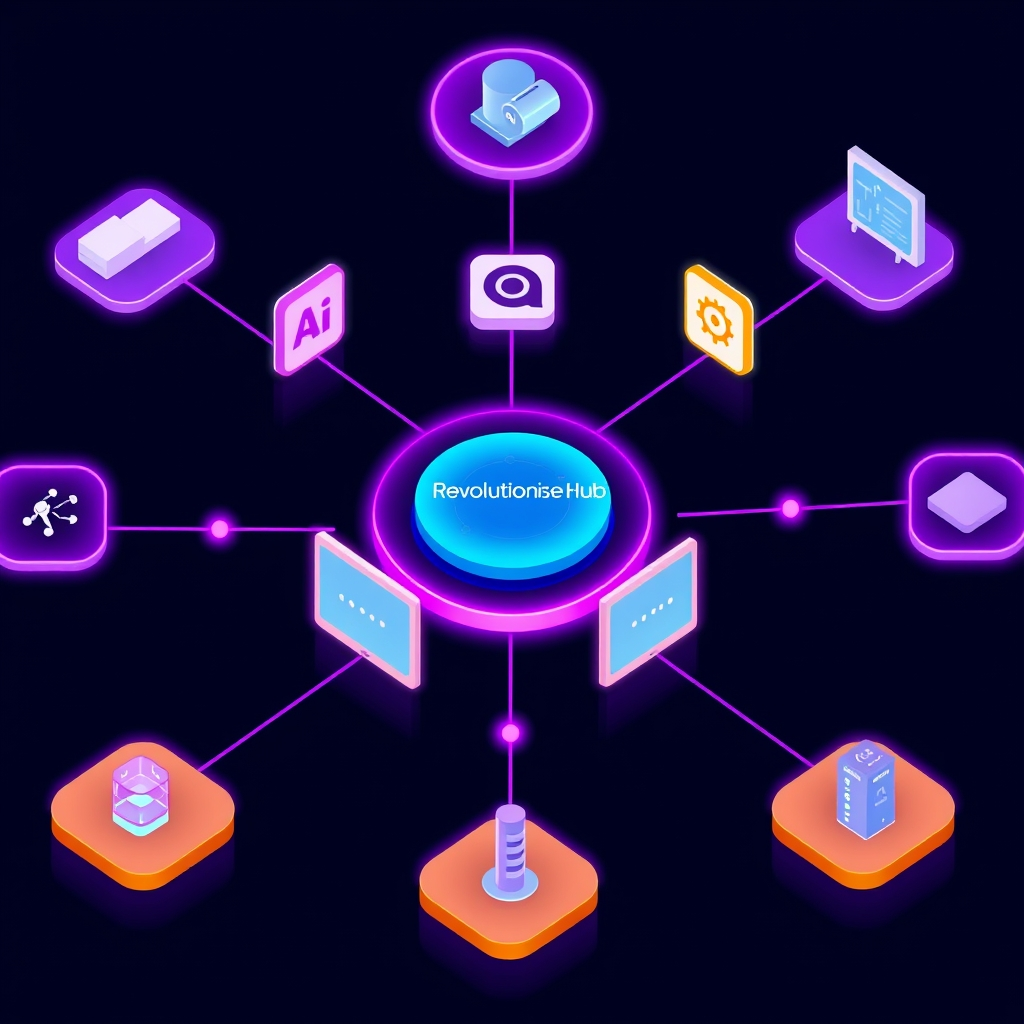
Imagine having the power to automate repetitive marketing tasks, personalize customer interactions, and boost sales – all without breaking the bank. For small businesses, ai marketing automation small business is no longer a luxury, but a necessity to stay competitive in today’s fast-paced digital landscape. By leveraging the latest advancements in artificial intelligence and machine learning, small businesses can streamline their marketing efforts, increase efficiency, and drive growth.
Key Takeaways
- Key insight on Unlocking the Potential of ai marketing automation small business: practical guidance for applying ai marketing automation small business in real workflows.
- Key insight on What are the Best AI Marketing Automation Tools for Small Business?: practical guidance for applying ai marketing automation small business in real workflows.
- Key insight on Can AI Marketing Automation Help Small Business Owners Save Time and Increase Productivity?: practical guidance for applying ai marketing automation small business in real workflows.
- Key insight on Real-World Use Cases for Small Business Marketing Automation: practical guidance for applying ai marketing automation small business in real workflows.
- Key insight on Pricing Comparison: HubSpot, Mailchimp, ActiveCampaign, and Zapier: practical guidance for applying ai marketing automation small business in real workflows.
What is AI Marketing Automation?
AI marketing automation refers to the use of artificial intelligence and machine learning algorithms to automate and optimize marketing processes, such as email marketing, social media management, and lead generation. This technology enables businesses to personalize customer interactions, predict customer behavior, and make data-driven decisions.
Benefits of AI Marketing Automation for Small Business
The benefits of ai marketing automation small business are numerous. By automating routine tasks, small businesses can free up resources, reduce costs, and focus on high-value activities like strategy and creativity. Additionally, AI-powered marketing automation tools can help small businesses improve customer engagement, increase conversion rates, and drive revenue growth.
How to Get Started with AI Marketing Automation
To get started with ai marketing automation small business, small businesses can begin by identifying areas where automation can have the greatest impact. This may include automating email marketing campaigns, social media posting, or lead nurturing. Next, small businesses can explore various marketing automation tools and platforms, such as AI Automation Starter Kit, to find the one that best fits their needs.
What are the Best AI Marketing Automation Tools for Small Business?
With so many marketing automation tools available, it can be overwhelming for small businesses to choose the right one. Some popular options include Make.com Automation Platform, which offers a visual workflow automation platform, and Claude Code for Entrepreneurs, which provides a comprehensive guide to building and automating business processes with AI.
Why AI Marketing Automation is a Game-Changer for Small Business
ai marketing automation small business is a game-changer for small businesses because it enables them to compete with larger corporations on a level playing field. By automating marketing processes, small businesses can reduce costs, increase efficiency, and improve customer engagement. Additionally, AI-powered marketing automation tools can help small businesses make data-driven decisions, predict customer behavior, and stay ahead of the competition.
How to Measure the Success of AI Marketing Automation
To measure the success of ai marketing automation small business, small businesses can track key performance indicators (KPIs) such as website traffic, social media engagement, lead generation, and conversion rates. By monitoring these metrics, small businesses can refine their marketing automation strategies, optimize their workflows, and drive continuous improvement.
Can AI Marketing Automation Help Small Business Owners Save Time and Increase Productivity?

Yes, ai marketing automation small business can help small business owners save time and increase productivity. By automating routine tasks, small business owners can free up resources, focus on high-value activities, and drive growth. Additionally, AI-powered marketing automation tools can help small business owners prioritize tasks, manage workflows, and make data-driven decisions.
When to Use AI Marketing Automation for Small Business
Small businesses can use ai marketing automation small business at any stage of their growth journey. Whether you’re just starting out or looking to scale your operations, marketing automation can help you streamline your marketing efforts, improve customer engagement, and drive revenue growth.
Is AI Marketing Automation Right for My Small Business?
To determine if ai marketing automation small business is right for your small business, consider your marketing goals, budget, and resources. If you’re looking to automate routine tasks, improve customer engagement, and drive growth, then marketing automation may be the perfect solution for you.
Real-World Use Cases for Small Business Marketing Automation
For a small business, implementing ai marketing automation small business strategies isn’t just about efficiency; it’s about creating personalized customer journeys that drive growth. Imagine a local bakery using ai marketing automation to send automated birthday emails with a special discount to customers who signed up for their loyalty program. This simple yet effective tactic fosters customer loyalty and encourages repeat business, directly impacting sales without manual intervention.
Consider a small e-commerce store specializing in handcrafted jewelry. They can leverage ai marketing automation small business platforms to send abandoned cart reminders. When a customer adds items to their cart but doesn’t complete the purchase, an automated email is triggered, perhaps offering free shipping or a small discount to incentivize them to finalize the order. This proactive approach can recover a significant percentage of lost sales.
Automated Lead Nurturing and Segmentation
Beyond simple email blasts, ai marketing automation small business tools excel at nurturing leads. A freelance graphic designer can set up a workflow where prospects who download a free guide from their website are automatically added to a specific email sequence. This sequence could drip-feed valuable content, case studies, and testimonials over several weeks, gradually building trust and positioning the designer as an expert. Once a lead shows enough engagement (e.g., clicks on a pricing page link), they can be flagged for personal follow-up, ensuring sales efforts are focused on the hottest prospects.
Even a small consulting firm can benefit immensely. They might use ai marketing automation small business solutions to segment their contact list based on industry or service interest. When new industry news relevant to a specific segment breaks, an automated, personalized email can be sent to that group, demonstrating their industry knowledge and keeping their firm top-of-mind. This level of tailored communication was once the exclusive domain of large enterprises but is now accessible to businesses of all sizes.
Pricing Comparison: HubSpot, Mailchimp, ActiveCampaign, and Zapier
When evaluating ai marketing automation small business solutions, understanding the pricing structure is crucial. These platforms often offer tiered plans based on contact volume, features, and email sends. For a small business starting out, the entry-level plans are often very affordable, sometimes even free for basic functionality.
HubSpot offers a robust free CRM that includes marketing automation capabilities. Paid plans, such as their Starter tier, begin around $45/month for marketing, sales, and service hubs, with features like email marketing, landing pages, and lead scoring. For more advanced ai marketing automation small business features, higher tiers are available.
Tiered Pricing Models
Mailchimp is a popular choice for its user-friendly interface, starting with a free plan that includes basic automation. Their Essentials plan, suitable for growing small businesses, starts at approximately $13/month for up to 500 contacts and unlimited sends, offering more sophisticated automation workflows and segmentation. Premium plans offer advanced features.
ActiveCampaign is known for its powerful automation engine. Their Lite plan, often a good starting point for ai marketing automation small business needs, begins around $29/month for 1,000 contacts, providing unlimited emails and more advanced automation recipes. Professional and Enterprise tiers offer even deeper functionality.
Zapier, while not a standalone marketing automation platform, acts as a crucial connective tissue. Its core function is integrating different apps. A free tier allows for 5 zaps and 100 tasks per month. Their starter plan, at $19.99/month, offers 20 zaps and 1,000 tasks, scaling up significantly for businesses that need to connect many ai marketing automation small business tools and services.
ROI Calculation Examples with Sample Numbers
Calculating the return on investment (ROI) for ai marketing automation small business initiatives is key to justifying the expense and measuring success. A common approach is to compare the revenue generated or costs saved against the investment made in the tools and the time spent setting them up.
Let’s consider a 5-person e-commerce business selling custom apparel. They implement an abandoned cart recovery sequence using ai marketing automation small business software. Suppose they have 100 abandoned carts per month, and historically, 10% convert to sales (10 sales). After implementing automation, they see a 20% conversion rate on abandoned carts, leading to 20 sales. If the average order value is $75, this automation adds $750 in monthly revenue (10 extra sales x $75).
Quantifying Gains
Now, let’s factor in the cost. Assume the ai marketing automation small business tool costs $50/month. The setup time might be 10 hours initially, valued at $50/hour, totaling $500. The monthly operational time is minimal, say 2 hours, costing $100. Total monthly investment: $50 (tool) + $100 (time) = $150. Monthly revenue gain: $750. Monthly ROI: (($750 – $150) / $150) * 100% = 400%.
Another example: a small service business uses ai marketing automation small business to qualify leads. Previously, a salesperson spent an average of 30 minutes per lead, with 1 in 10 leads becoming a customer. They have 50 leads per month. This means 50 leads * 0.5 hours/lead = 25 hours of sales time per month on lead qualification. If they automate the initial qualification (e.g., via email surveys and segmentation), they reduce this to 5 hours of sales time per month. Saving 20 hours of salesperson time. If the salesperson’s time is valued at $60/hour, this saves $1200 per month. If the automation tool costs $75/month, the monthly ROI is (($1200 – $75) / $75) * 100% = 1500%. These calculations highlight the significant potential financial impact of ai marketing automation small business adoption.
Integration Ecosystem and Tool Connections
The true power of ai marketing automation small business platforms is often unlocked through their ability to integrate with other tools your business already uses. A seamless integration ecosystem ensures data flows freely between systems, providing a unified view of your customer and enabling more sophisticated automation workflows.
For instance, a small business using Shopify for their e-commerce store can integrate it with Mailchimp or Klaviyo. This connection allows purchase data from Shopify to automatically trigger specific email campaigns in the email platform, such as post-purchase follow-ups or replenishment reminders. Without this integration, manually exporting and importing customer data would be time-consuming and prone to errors, hindering effective ai marketing automation small business efforts.
Connecting Your Tech Stack
CRM systems like HubSpot or Pipedrive are central to many businesses. Integrating your marketing automation tool with your CRM ensures that leads captured through marketing efforts are seamlessly passed to sales, and sales activities are reflected back in the marketing data. This bi-directional sync is critical for lead nurturing and sales enablement. For example, if a sales rep updates a contact’s status in HubSpot, the ai marketing automation small business platform can be notified to adjust the customer’s communication track accordingly.
Beyond core marketing and sales tools, consider integrations with customer support platforms (like Zendesk), webinar software (like Zoom), or even accounting software (like QuickBooks). Tools like Zapier and Make (formerly Integromat) act as bridges, allowing you to connect virtually any two cloud-based applications, even if they don’t have native integrations. This flexibility is vital for small businesses looking to build a custom ai marketing automation small business solution tailored to their unique needs.
Pros and Cons
| Pros | Cons |
|---|---|
| Increased Efficiency and Time Savings | Initial Setup Time and Learning Curve |
| Enhanced Personalization and Customer Experience | Cost Can Escalate with Features and Contacts |
| Improved Lead Generation and Nurturing | Over-reliance Can Lead to Impersonal Communication |
| Better Data Tracking and Analytics | Requires Clear Strategy and Goal Setting |
| Scalability to Grow with Your Business | Potential for Technical Glitches or Integration Issues |
| Consistent Brand Messaging Across Channels | Data Privacy and Security Concerns Need Management |
Best Use Cases by Company Size (solo, 2–10, 11–50 employees)
The optimal implementation of ai marketing automation small business strategies often depends on the size and resources of the company. What works for a solopreneur might be overkill for a team of two, and vice versa.
Solo Entrepreneurs: For a one-person operation, the primary goal of ai marketing automation small business tools is often time-saving and consistent outreach. Simple email sequences for lead nurturing (e.g., after a consultation booking), automated welcome emails for new subscribers, and social media scheduling are key. Tools like Mailchimp’s basic automation or a free tier of HubSpot CRM can be sufficient. The focus is on automating repetitive tasks to free up the entrepreneur’s time for client work or business development.
Tailoring Automation to Team Size
Businesses with 2–10 Employees: At this stage, businesses often have more defined sales processes and a growing customer base. More sophisticated ai marketing automation small business workflows become valuable. This could include lead scoring to prioritize sales outreach, more complex segmentation for targeted email campaigns, and A/B testing of email subject lines and content. ActiveCampaign or HubSpot’s Starter plans are often well-suited here, allowing for better lead management and campaign optimization. Integration with CRMs becomes more critical.
Businesses with 11–50 Employees: Larger small businesses typically have dedicated marketing or sales teams. Here, comprehensive ai marketing automation small business platforms are essential for managing complex customer journeys, multi-channel campaigns (email, SMS, social), and deeper analytics. They might employ advanced features like dynamic content personalization, predictive analytics, and sophisticated A/B/n testing. Tools like HubSpot’s Professional tiers, ActiveCampaign’s higher plans, or even enterprise-level solutions integrated via Zapier become viable. The emphasis shifts towards optimizing marketing ROI, aligning sales and marketing efforts, and driving scalable growth.
Alternatives and When to Choose Each Option
While dedicated ai marketing automation small business platforms offer a robust suite of tools, there are alternative approaches and tools that might be better suited depending on specific needs, budget, and technical expertise.
Basic Email Marketing Services: If your primary need is sending newsletters and simple automated responses (like order confirmations or welcome emails), a straightforward email marketing service like Constant Contact or Sendinblue (now Brevo) might suffice. These are generally less complex and more affordable than full-fledged automation platforms. Choose these if your ai marketing automation small business goals are limited to basic email communication and list management.
Choosing the Right Path
CRM with Integrated Marketing Features: Many CRMs, including Zoho CRM or Salesforce Essentials, offer built-in marketing automation capabilities. If you are already heavily invested in a CRM or plan to be, leveraging its native automation features can simplify your tech stack and ensure tight integration between sales and marketing data. This is a good option if your CRM already handles most of your customer data and you want a unified platform for ai marketing automation small business tasks.
Manual Processes or Simple Scripts: For very early-stage businesses with extremely limited budgets and simple needs, manual follow-up or very basic scripts (e.g., using spreadsheet formulas or simple calendar reminders) might be the only option. However, this approach quickly becomes unscalable and inefficient as the business grows. This is only a viable short-term ai marketing automation small business strategy for businesses with minimal lead volume and extremely simple outreach requirements.
Integration Platforms (Zapier, Make): As mentioned, these tools don’t automate marketing directly but connect other tools. If you use best-of-breed tools for each function (e.g., one CRM, a separate email tool, a separate social media scheduler) and need to automate the flow of data between them, Zapier or Make are essential. They provide flexibility but require you to piece together your ai marketing automation small business solution from multiple services.
Frequently Asked Questions
What is the typical pricing for AI marketing automation tools for small businesses?
The pricing for AI marketing automation tools can vary widely, but most small businesses can expect to pay between $50 to $500 per month, depending on the features and scale of the tool. Some popular options offer tiered pricing plans, with basic plans starting at around $10-20 per month. It's essential to evaluate your specific needs and choose a tool that fits your budget.
How long does it take to set up AI marketing automation for my small business?
The setup time for AI marketing automation can range from a few hours to several days, depending on the complexity of the tool and your existing marketing infrastructure. On average, most small businesses can expect to spend around 1-3 days setting up and configuring their AI marketing automation tool. Some tools also offer guided onboarding processes to help streamline the setup process.
Do AI marketing automation tools integrate with other business systems and platforms?
Yes, most AI marketing automation tools offer integrations with popular business systems and platforms, such as CRM software, email marketing tools, and social media management platforms. These integrations enable seamless data exchange and help you create a unified marketing strategy. Be sure to check the tool's integration capabilities before signing up to ensure it works with your existing tech stack.
What kind of return on investment (ROI) can I expect from AI marketing automation?
The ROI from AI marketing automation can vary depending on your specific business goals and implementation. However, many small businesses have reported significant improvements in marketing efficiency, lead generation, and conversion rates, resulting in an average ROI of 200-500% or more. To maximize ROI, it's crucial to set clear goals, track key metrics, and continually optimize your AI marketing automation strategy.
What are some alternatives to AI marketing automation tools for small businesses?
Some alternatives to AI marketing automation tools include traditional marketing automation software, email marketing platforms, and social media management tools. Additionally, some small businesses may opt for manual marketing processes or outsourcing to a marketing agency. However, AI marketing automation tools offer unique benefits, such as predictive analytics and personalized customer experiences, that can be difficult to replicate with alternative solutions.
What are some common mistakes beginners make when implementing AI marketing automation?
Common mistakes beginners make when implementing AI marketing automation include not setting clear goals, failing to integrate with existing systems, and not providing sufficient training data. Additionally, some small businesses may over-rely on automation, neglecting the need for human oversight and strategic guidance. To avoid these mistakes, it's essential to approach AI marketing automation with a clear understanding of your business needs and a willingness to learn and adapt.
Do I need to have technical expertise to use AI marketing automation tools?
While some technical knowledge can be helpful, most AI marketing automation tools are designed to be user-friendly and accessible to non-technical users. Many tools offer visual interfaces, drag-and-drop editors, and pre-built templates to simplify the setup and configuration process. However, having some basic understanding of marketing concepts and data analysis can help you get the most out of your AI marketing automation tool.
How do I measure the success of my AI marketing automation efforts?
To measure the success of your AI marketing automation efforts, track key metrics such as email open rates, conversion rates, lead generation, and customer engagement. You should also monitor your ROI and adjust your strategy accordingly. Many AI marketing automation tools offer built-in analytics and reporting features to help you track your performance and make data-driven decisions.
Disclosure: This post may contain affiliate links. If you buy through these links, we may earn a commission at no additional cost to you.